At the age of twenty-five, I became interested in mental training and began studying with Lars-Eric Uneståhl, partly through Örebro University and partly in private courses. Today, mental training is a well-established concept, but when I first began, it was almost regarded as something suspicious.
Mental training was initially directed primarily toward athletes, but it soon expanded to include a broader group of people seeking to develop their mental abilities through systematic training. Books such as The Inner Game of Tennis were followed by titles like The Inner Game of Music.
A simple online search for ”mental training” produces an enormous number of results. To truly benefit from mental training requires precisely that: a great deal of training, but it is unquestionably worth the effort.
NLP – Neuro-Linguistic Programming
For me as a teacher, integrating NLP into my pedagogy produces remarkable results, and it is exceptionally well suited to singers.
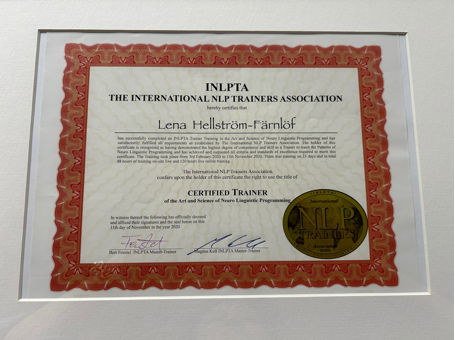
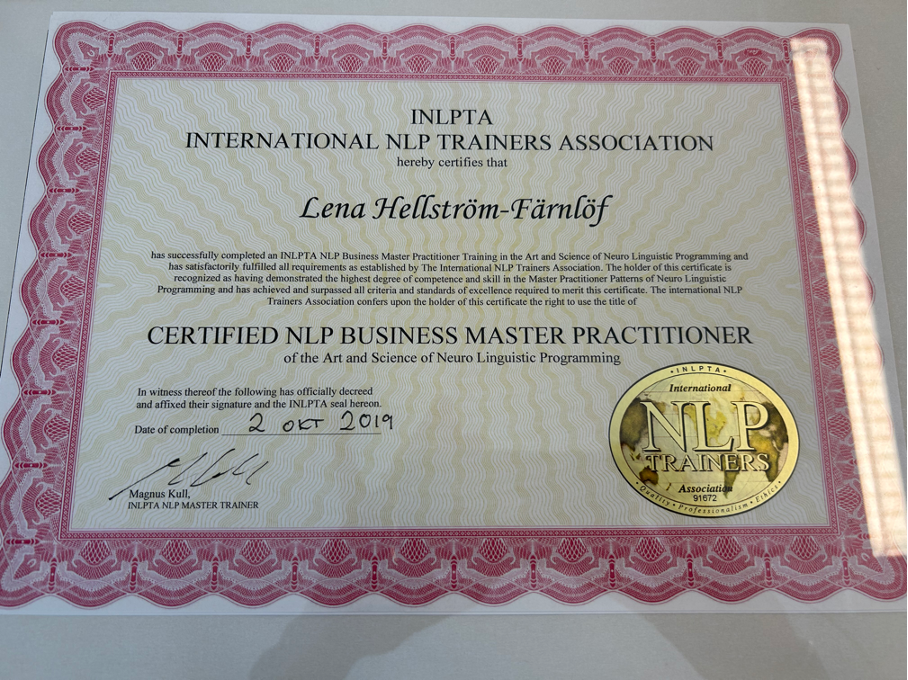
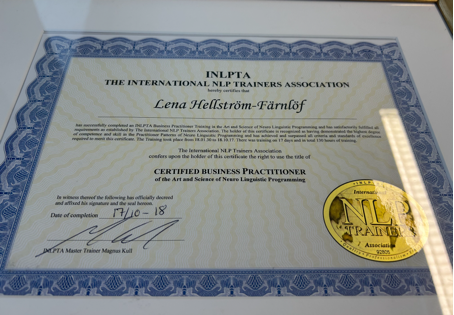
I never cease to be fascinated by the resources we carry within ourselves. This fascination is one reason why I completed both a Business Practitioner of the Art and Science of NLP, a Business Master Practitioner of the Art and Science of NLP, and a Certified Trainer of the Art and Science in NLP.
In brief, NLP can be described as a collection of techniques and models developed through studying how highly successful individuals think, act, and feel when they accomplish what others have not been able to achieve.
Neuro
The nervous system, through which we experience the world via our senses.
Linguistic
Our verbal and non-verbal communication systems, which encode, organize, and create meaning.
Programming
The ways in which we choose to organize our thoughts and actions in order to achieve results. There are several fundamental presuppositions within NLP, one of which is:
Every individual possesses within themselves the resources they need in order to create desired change.
Another is:
A starting point for development is deciding in which direction one wishes to develop.
A fitting Winnie-the-Pooh quotation in this context would be:
”If you know what you are looking for, chances are you will find it.”

If I know what I am looking for, chances are I will find it!
To understand and apply language patterns — such as thinking in terms of both parts and wholes, always considering multiple perspectives, recognizing patterns of cause and effect, generalizations, omissions of information, or reframing situations in order to view them differently — is essential. Equally important is engaging mind, body, and heart together, as well as learning how to manage and influence one’s emotional and mental states.
These are just a few examples of the skills developed through the many tools within NLP, all of which support both personal growth and professional mastery.
What the artist never stops asking is how art itself can continue reaching new heights. One central question within NLP is:
”What is the difference that makes the difference?”
LENA HELLSTRÖM-FÄRNLÖF, EN AV SVERIGES FRÄMSTA SÅNGPEDAGOGER
MENTAL TRÄNING OCH NLP
Redan i 25-årsålder blev jag intresserad av mental träning och startade på kurs för Lars-Eric Uneståhl. Dels genom Örebro universitet men också privat. Nu är det ett välkänt begrepp men när jag började var det nästan något som ansågs suspekt. Först vände sig den mentala träningen till idrottare men ganska snart även till en större grupp som ville utveckla den mentala förmågan genom träning. Böcker med titeln ”The inner Game of Tennis”, fick efterföljare som ”The inner Game of Music”. Att googla på mental träning ger otroligt många träffar, att använda sig av mental träning kräver just mycket träning men är väl värt mödan.
NLP – Neuro Lingvistisk Programmering
Att väva in NLP för mig som pedagog ger strålande resultat och det passar så fantastiskt bra för sångare!
Jag slutar aldrig att fascineras över de resurser som vi har inom oss! Det är en anledning till att jag utbildat mig inom NLP med diplom i Business Practitioner of the Art and Science of NLP, a Business Master Practitioner of the Art and Science of NLP, and a Certified Trainer of the Art and Science in NLP.
Kortfattat kan det beskrivas att det finns mängder med tekniker och modeller som tagits fram genom att studera hur framgångsrika personer gör, tänker och känner när de lyckas med det som andra inte lyckats med.
- Neuro – nervsystemet, där vi upplever världen genom våra sinnen
- Lingvistisk – Våra verbala och ickeverbala kommunikationssystem som kodar, ordnar och skapar mening.
- Programmering – de sätt som vi väljer för att organisera våra tankar och handlingar för att uppnå resultat.
Det finns flera grundantaganden inom NLP där ett är:
Varje individ har inom sig de resurser de behöver för att göra önskade förändringar.
Ett annat:
En utgångspunkt för utveckling är att ha bestämt i vilken riktning man ska utvecklas.
Här skulle ett Nalle Puh citat vara: ”Om du vet vad du letar efter är chansen stor att du hittar det!”
Om jag vet vad jag letar efter är chansen stor att jag hittar det!
Att förstå och använda språkmönster som t.ex. tänkandet av delar och helhet, att alltid se multipla perspektiv, att upptäcka språkmönster som t.ex. orsak och verkan, generaliseringar, utelämnande av fakta eller omramning för att se en situation eller tanke på annat sätt. Att alltid ha med tanke, kropp och hjärta! Eller att hantera och påverka tillstånd! Det är ett axplock av färdigheter, som utvecklas genom några av alla verktyg inom NLP, för att gå vidare i personlig utveckling och professionellt mästerskap.
Det som konstnären aldrig slutar med är frågorna om hur konsten ytterligare kan nå nya höjder! En bärande fråga inom NLP är: ”Vad är skillnaden som gör skillnad?”